Risk & duty of care
The question is never
“was there an injury?”
It is “what did the school know, when did it know it, and what did it do?” Most athletics programmes cannot answer that in writing. That is the exposure Better Athlete closes.
What the record looks like over a season
Every flag, seen and recorded.
A pattern from a typical fall season — as logging becomes routine, more gets seen early, and every flag carries a dated record of what the school did about it.
Reports flagged trend upward as logging becomes routine. Based on real-life events. Names and details are fictional.
What changes legally
An unbroken record, made automatically.
Nobody has to remember to document anything. The record is a by-product of the programme running normally — which is precisely what makes it credible.
“Reasonable care is not a feeling. It is a documented sequence: you were told, you acted, you recorded it. Programmes lose on the third one.”
How reasonable care is documented
Better Athlete does not provide legal advice.
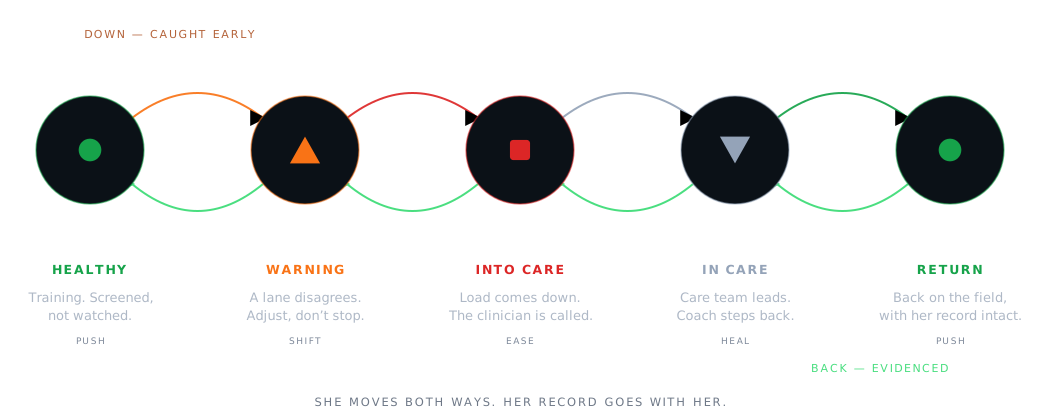
The clinical line
The system knows what it is not.
The fastest way for a school to create risk is to let software look like it is making medical decisions. Better Athlete is built so that cannot happen.
A read is a screening view of how training is landing. The language is training language — push, hold, ease — never clinical.
A short, fixed list of reports stop the athlete and route her to a person. The app does not attempt to interpret them.
Nothing overrides them. Clinical detail is visible only to clinical roles, and coaches never see a private note or a clinical finding.
Menstrual-cycle entries are never visible to a coach, an AD, or a parent. Restricting that data is a risk control, not a feature.
Data & records
Student data, handled like student data.
Role-scoped by default
Every role sees only what its job requires. Leadership sees de-identified rollups; business roles see aggregate only.
The record belongs to the athlete
She keeps it when she leaves. The school holds a copy for the period of enrolment, per your retention policy.
Export & deletion on request
Full export or deletion for any athlete, on parental or institutional request, without a support ticket.
Your policy, not ours
Retention windows, consent language and parental-access rules are configured to match your existing student-records policy.
The bottom line
Insurers ask for evidence.
So do parents, eventually.
The programme that can produce the sequence is in a materially different position to the one that cannot.
Better Athlete is a training-intelligence service, not a medical device. A read is a screening view of how training is landing — it does not diagnose, and it does not replace the judgement of your athletic trainer, school nurse, or physician.